Where a Medical Assistant Salary Leads in San Antonio
Where a Medical Assistant Salary Leads in San Antonio
A medical assistant salary is best understood as an entry point into healthcare rather than a destination. The national median sits near $45,690, and for many San Antonio students the more useful question is not what the role pays but what it opens — because medical assisting is one of the few healthcare jobs you can hold in under six months of training, and it puts you inside a clinic where the next step becomes visible.
According to the U.S. Bureau of Labor Statistics, the median annual wage for medical assistants was $45,690, with employment projected to grow 13 percent from 2025 to 2035 — much faster than the average for all occupations (U.S. Bureau of Labor Statistics, Occupational Outlook Handbook, May 2025).
Key Takeaways
- BLS reports a national median of $45,690 for medical assistants, with the lower end near $36,050.
- The credential and the documented clinical skills behind it are what San Antonio employers screen for.
- Many medical assistants use the role as a first step toward licensed nursing positions, each of which requires its own education and licensure.
- Training here takes 18 weeks, which is what makes it a realistic entry point for a working adult.
What the National Figures Actually Say
The median is a midpoint: half of medical assistants nationally earn above $45,690 and half below. BLS reports the lower end of the range near $36,050, which generally describes first clinical jobs before you have a track record.
These are national figures spanning every state and experience level, so treat them as the shape of the occupation rather than a San Antonio offer. Current local postings are the better guide to what employers here are paying in the setting you are targeting.
What San Antonio Employers Weigh
San Antonio outpatient care runs through large hospital systems with extensive clinic networks, independent primary care practices, and specialty groups. They post differently, but they screen on the same two things: whether you hold the credential, and whether you can perform the clinical work without supervision from day one.
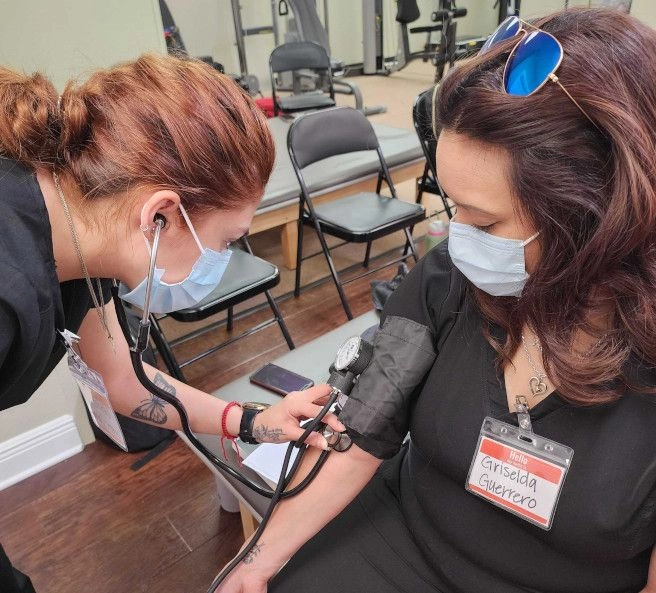
That second part is what postings are really describing when they list vital signs, venipuncture and order of draw, electrocardiograms, injections, rapid testing, and electronic health record charting. A range’s upper figures are written for someone who can do all of it at clinic tempo.
Medical Assisting as a First Step
This is the part salary articles usually skip. A large share of people who enter medical assisting do not stay in it indefinitely — they use it to get inside healthcare, find out which part of it suits them, and then train further while employed.
The roles medical assistants most commonly move toward are licensed nursing positions, and BLS reports substantially different medians for each:
- Licensed Practical Nurse (LPN) — provides basic nursing care under the direction of registered nurses and physicians. National median $64,400.
- Registered Nurse (RN) — coordinates patient care and educates patients about their conditions. National median $97,550.
- Nurse Practitioner (NP) — diagnoses and treats patients, and can prescribe medication in most states. National median $132,300.
What Those Next Steps Actually Require
Be clear-eyed about this: none of those roles follow automatically from working as a medical assistant. Each is a separate occupation with its own schooling and its own state licensure, and moving into one means going back to school while working.
What medical assisting gives you is not a shortcut past those requirements. It gives you clinical experience, a paycheck while you study, an employer who may support further training, and — most usefully — direct exposure to what those jobs involve before you commit years to one. Plenty of people discover during an externship that they would rather stay in outpatient care than pursue nursing at all. That is a legitimate outcome, not a failed one.
Does Certification Change What You Are Paid?
Certification is not a pay rate. Texas does not license or register medical assistants, and no state law requires a credential to work as one.
What the NHA Certified Clinical Medical Assistant credential does in San Antonio is determine which postings will consider your application, since most clinical roles list it as a requirement. Pay for any specific role is set by the employer. Because Texas physicians delegate clinical tasks under their own authority, verify specific scope questions with the employer and the Texas Medical Board.
Why 18 Weeks Is the Number That Matters
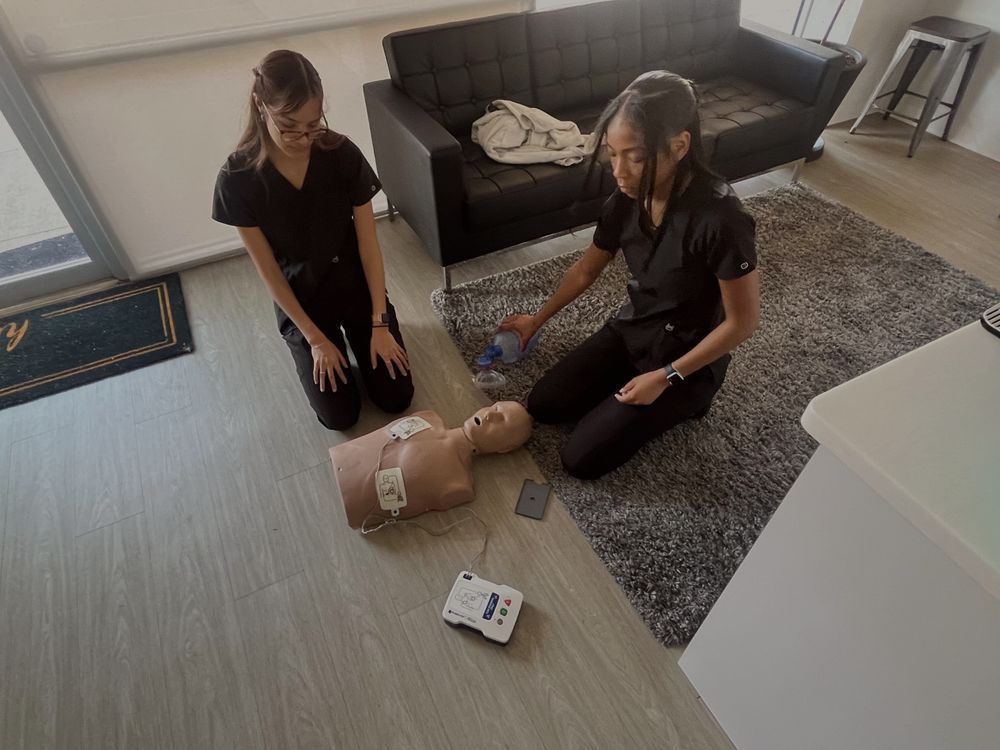
The reason medical assisting works as an entry point is the timeline. San Antonio Medical Assistant School runs an 18-week hybrid program: coursework online during the week, plus one 4.5-hour lab every Saturday inside a working medical office. Students become eligible to begin their 80-hour externship after week 8.
Four campuses run it — Alamo Heights, Alamo Ranch, Northwest, and South — so the Saturday commute is usually short.
Devon drove a delivery route on the far West Side for six years before enrolling. He kept the route through the first eight weeks, shifted hours for the externship, and was working in a family medicine clinic by the following spring.
Tuition is $4,490, payable in full or across a payment plan: $1,950 down with weekly payments of $157.78 over 18 weeks, or $950 down with weekly payments of $213.33. Current terms are posted on the tuition page. Tuition Savings may be available depending on your start date; ask admissions what applies to yours.
Frequently Asked Questions
Do the BLS figures describe San Antonio specifically?
No. They are national medians covering all states and experience levels. Use them for the shape of the range, then read current San Antonio postings for what local employers are offering.
Can I become a nurse after working as a medical assistant?
Many people do, but it requires completing a separate nursing program and obtaining state licensure. Medical assisting does not substitute for any part of that. What it provides is clinical experience and income while you pursue it.
Does the certification affect my pay?
It determines which roles you are eligible to apply for, since most San Antonio clinical postings require it. The employer sets the pay for any given position.
Do I need healthcare experience to enroll?
No. No prior healthcare experience is required. Most students come from other fields entirely.
Getting Started in San Antonio
If you are weighing a medical assistant salary against the cost of training, weigh the position too — 18 weeks puts you inside a clinic, earning, with a clear view of every other role in the building.
Ready to start your medical assistant career in San Antonio? Explore the San Antonio Medical Assistant School program and take the first step today.
You're only a few months from the medical assistant career you deserve.